Enfield Town oven cleaning guide for busy households
Posted on 09/06/2026
Enfield Town Oven Cleaning Guide for Busy Households
If your oven is doing that thing where it looks fine from a distance but tells a very different story when the door opens, you are not alone. This Enfield Town oven cleaning guide for busy households is for the people juggling school runs, late finishes, work calls, and dinner that somehow still has to happen tonight. The good news? You do not need a whole free afternoon to keep an oven presentable, safe, and working properly. You just need a simple routine that fits real life.
In this guide, you will find a practical way to keep oven grease, burnt-on spills, and stubborn odours under control without turning cleaning day into a second job. We will cover fast methods, the right tools, common mistakes, and when it makes sense to hand the job over. To be fair, ovens have a talent for collecting mess in the one place nobody wants to scrub after a long day. Let's make the process less painful.
Why Enfield Town oven cleaning guide for busy households Matters
Oven cleaning tends to slip down the list until the smoke alarm gives you a small lecture or the kitchen starts smelling a bit too much like last Sunday's roast. Busy households in Enfield Town often need a cleaning routine that is realistic, not idealistic. That means fewer deep cleans that never happen, and more small actions that prevent the build-up from becoming a proper headache.
A dirty oven is not just a cosmetic issue. Grease build-up can create lingering smells, uneven cooking, smoke, and extra wear on the appliance. If you cook often, especially with roasting tins, trays, or grills, the inside of the oven can move from "a bit grim" to "why is this taking so long?" surprisingly quickly.
There is also the time factor. A heavy scrub after weeks of build-up usually takes far longer than five or ten minutes of regular upkeep. That is the heart of this guide: keep the task small enough that you will actually do it.
Expert summary: The best oven cleaning routine for a busy household is not the deepest one. It is the one you can repeat consistently, with minimal fuss, minimal fumes, and minimal disruption to dinner.
If you already keep on top of general household cleaning, you may also find it helpful to think in terms of whole-home maintenance. For broader home care support, the practical approach used in domestic cleaning in Enfield and house cleaning support often mirrors the same principle: small, regular jobs beat heroic catch-up sessions every time. Same story with ovens, honestly.
How Enfield Town oven cleaning guide for busy households Works
The basic idea is straightforward. Instead of waiting for baked-on residue to spread everywhere, you break oven care into manageable parts: quick wipe-downs, scheduled deeper cleaning, and sensible prevention. That is it. No drama.
A good routine usually has three layers:
- After-cooking maintenance: remove crumbs, spills, and fresh splashes once the oven is cool.
- Weekly or fortnightly attention: deal with grease on racks, glass, seals, and the cavity before it hardens.
- Periodic deep cleaning: remove trays, loosen residue, and clean the parts that are easiest to forget.
The method you choose depends on how much cooking you do, what sort of meals you make, and how much time you realistically have. A household that uses the oven daily will need a different rhythm from one that mostly cooks on weekends.
The other thing worth saying: different ovens react differently. Fan ovens, conventional ovens, and self-cleaning models all behave in their own slightly annoying ways. If your oven has a self-clean cycle, it still needs care. Self-clean does not mean self-perfect. If only.
Key Benefits and Practical Advantages
Keeping on top of oven cleaning pays off faster than most people expect. The benefits are practical, visible, and slightly satisfying too, which helps.
- Less smoke and smell: old grease is a common cause of burnt odours during cooking.
- Better cooking performance: cleaner ovens tend to heat more evenly and recover more predictably after opening the door.
- Less hard scrubbing: small clean-ups are much easier than attacking months of carbon build-up.
- Improved kitchen hygiene: food debris and grease attract unwanted grime very quickly.
- Longer appliance life: regular care helps reduce strain on seals, fans, and internal surfaces.
- Less stress before guests arrive: there is a noticeable difference between "used kitchen" and "that oven needs a rescue."
For households that host often, cook family meals in batches, or rely on the oven for quick weekday dinners, the gain is simple: you get a cleaner, calmer kitchen without spending all weekend on it. That matters more than people think.
If your oven cleaning is part of a bigger reset, it may fit neatly alongside a deep cleaning service in Enfield or even a spring clean when the whole home needs attention. Sometimes pairing jobs makes the job feel less annoying. Strange, but true.
Who This Is For and When It Makes Sense
This guide is especially useful if you live in a busy household where time is always a bit tight and the kitchen sees daily use. That could mean a family home, a shared house, or a household where one person cooks everything while the rest somehow generate the mess. We see how that happens.
It makes sense if you:
- cook most days and want a simple maintenance routine
- have children and need quicker, safer cleaning methods
- host family meals or weekend gatherings
- have recently moved in and want a fresh start
- are preparing for a tenancy inspection or sale
- notice odours, smoke, or stubborn residue after cooking
It is also useful if your kitchen cleaning is already part of a broader home care plan. For example, households that book a one-off refresh sometimes combine it with tasks like flooring, upholstery, or general household cleaning. That is where services such as one-off cleaning in Enfield can make sense, especially when life has got away from you a bit.
If you are moving in or out, oven condition can be more important than people realise. End-of-tenancy checks often focus on obvious grease and food residue, so a neglected oven can become an avoidable issue. Not ideal, and very preventable.
Step-by-Step Guidance
Here is a practical way to clean an oven without losing your whole evening. Keep it simple, and do not try to do every single part in one heroic burst unless you genuinely have the time.
1. Let the oven cool completely
Safety first. Always wait until the oven is fully cool before cleaning. Warm residue can smear, and hot surfaces can cause burns. It is a small delay that saves a lot of trouble.
2. Remove loose crumbs and debris
Use a soft brush, dry cloth, or handheld vacuum designed for kitchen use to collect crumbs from the base and door edges. This stops dry bits turning into sticky sludge the moment you add moisture.
3. Take out racks, trays, and shelves
These parts usually carry the worst grease, so deal with them separately if you can. Soak them in warm water with a suitable degreasing detergent. A sink, bath, or large tray can work depending on size. Just be mindful of scratches on delicate surfaces.
4. Apply a suitable cleaner to internal surfaces
For everyday maintenance, use a non-abrasive oven cleaner or a mild cleaning solution appropriate for the appliance. Avoid over-saturating the cavity. A little goes a long way. Scrubbing everything aggressively is rarely the answer, although it feels satisfying for about 30 seconds.
5. Focus on grease-heavy areas
Pay attention to the door glass, corners, fan cover, and around the seal. These are the places where grime tends to hide. If left alone, they become the kind of stains people pretend not to notice. You know the ones.
6. Wipe and rinse thoroughly
Use a clean damp cloth to remove cleaner residue, then dry the surfaces. Leftover product can affect smell and may leave streaks or a chalky film.
7. Clean the oven door glass separately
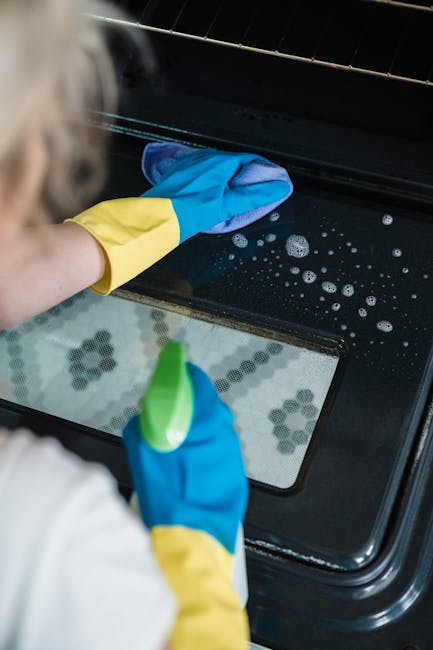
Glass often needs a gentler approach. Use a non-scratch cloth and a cleaner that will not cloud the surface. Do not force abrasive pads onto it. That is one of those decisions that feels efficient in the moment and annoying later.
8. Refit racks and trays only when dry
Put everything back once it is dry and free from residue. A damp rack can trap moisture and give you a new clean-up job, which nobody asked for.
For households that also want cleaner fabrics around the kitchen seating area or dining space, it can be handy to coordinate with upholstery cleaning in Enfield. Kitchens are sneaky like that; grease and dust do not always stay where you expect.
Expert Tips for Better Results
A few small habits make oven care much easier. These are the things that save time later, which is usually the whole point.
- Clean spills early: the sooner you deal with splashes, the less scrubbing you will need later.
- Use oven liners carefully: only if they are suitable for your appliance and placed correctly. Bad placement can affect airflow.
- Keep a damp cloth nearby after roasting: a quick wipe while residue is still soft is a small win.
- Do the glass often: the oven door is visible every day, so a clean pane changes the whole feel of the kitchen.
- Don't overload with cleaning product: more cleaner does not mean better cleaner. Usually it means more wiping.
- Ventilate the kitchen: open a window if you are using stronger products. It helps with fumes and makes the room feel less heavy.
If your routine is already packed, try tying oven checks to another habit, like Sunday prep or the last dish wash of the night. Habits stick when they attach to something you already do. That is not fancy, but it works.
Another useful trick: keep a soft microfiber cloth, a small scraper suitable for glass or enamel, and a pair of gloves in one cleaning caddy. If the tools are easy to grab, you are more likely to use them. That sounds obvious. Yet somehow it helps.
Common Mistakes to Avoid
Most oven-cleaning problems come from rushing, using the wrong product, or leaving mess far too long. Here are the big ones to watch for.
- Cleaning while the oven is still hot: this increases risk and can make residue smear.
- Using abrasive pads on glass or enamel: you can scratch surfaces and make future cleaning harder.
- Letting cleaner sit too long: always follow product guidance and do not assume longer is better.
- Ignoring the seal: grime around the door seal can affect cleanliness and, over time, performance.
- Forgetting the racks: clean racks matter, because they are usually the worst offenders.
- Skipping ventilation: even mild products can build up odour in a closed kitchen.
The other common mistake is expecting one cleaning session to solve months of build-up. Sometimes it does, but not always. Burnt carbon can take a few passes. That is normal. Annoying, yes. Normal, also yes.
Tools, Resources and Recommendations
You do not need a mountain of gadgets. In fact, fewer tools often means less clutter and less decision fatigue. For a busy household, the best kit is the one you can actually keep organised.
| Tool or item | Best use | Why it helps |
|---|---|---|
| Microfiber cloths | General wiping and drying | Soft, reusable, and good at lifting residue without scratching |
| Non-scratch sponge | Light to medium grease removal | Good for delicate surfaces and door glass |
| Mild degreasing cleaner | Everyday oven maintenance | Helps break down grease without heavy fumes |
| Gloves | Hand protection | Useful if you are sensitive to cleaning products |
| Small brush or scraper | Crumbs and stubborn spots | Makes corner cleaning easier |
When the mess has built up beyond a sensible point, or when you simply do not have the time, a professional oven clean can be the calmest route. If you are comparing options, the wider services overview page can help you see how one-off, deep, and domestic cleaning fit together. You may also want to check pricing and quotes if you are deciding between doing it yourself and getting help.
For households that value reassurance, a few trust-related pages are worth knowing about too, especially if you are booking cleaning support for the first time. Insurance and safety and health and safety policy explain the sort of standards a careful provider should follow. That kind of transparency matters. It really does.
Law, Compliance, Standards and Best Practice
For a home oven, most of the practical emphasis is on safety, manufacturer guidance, and sensible product use rather than complicated regulation. Still, best practice matters. In the UK, cleaning should always be carried out in a way that avoids damage, protects the user, and follows the appliance instructions where relevant.
That means a few straightforward things:
- Use products as directed by the label or appliance instructions.
- Do not mix cleaning chemicals unless the product guidance clearly allows it.
- Keep cleaning materials away from children and pets.
- Make sure the oven is off and cool before starting.
- Ventilate the area if using stronger cleaning products.
If you are in a rented property, it is also sensible to think about expectations around cleanliness, especially at the end of a tenancy. A neglected oven can become part of a checkout dispute if it is obviously dirty or greasy. The exact expectations depend on the tenancy terms, but a clean, hygienic appliance is usually the safer position. For broader moving-related cleaning support, end of tenancy cleaning in Enfield is often the most practical route.
There is also a simple quality standard issue. A properly cleaned oven should feel dry, smell clean rather than perfumed-over, and not leave residue on your hands or cloth after a wipe. That is a good rough test, and it avoids pretending a shiny surface is enough when grease is still hiding in corners.
Options, Methods, or Comparison Table
If you are deciding how to tackle the job, it helps to compare the common approaches side by side. The right choice depends on time, mess level, and how much effort you want to spend.
| Method | Best for | Pros | Cons |
|---|---|---|---|
| Quick wipe-down | Light daily or weekly maintenance | Fast, easy, prevents build-up | Won't handle heavy carbon deposits |
| DIY deep clean | Moderate grime and regular households | Cost-effective, flexible, personal control | Time-consuming, can be messy |
| Professional oven cleaning | Heavy build-up or time-poor households | Thorough, convenient, less effort for you | Costs more than doing it yourself |
For most busy households, the sweet spot is a combination: quick wipes most weeks, then a proper deeper clean every so often. Professional help makes most sense when the oven has been neglected, when you are short on time, or when you want a very thorough result without spending the evening on it.
If you are already thinking about wider home maintenance, you might also find it useful to browse carpet cleaning in Enfield. Kitchen cleaning often leads people to notice other areas that need attention. One thing tends to reveal another. That is home life for you.
Case Study or Real-World Example
Picture a typical Enfield Town household: two working adults, one child, a fairly full calendar, and a kitchen that sees fast weekday meals plus a roast on Sunday. The oven is used a lot, but nobody has the time to do a full deep clean every week. Sounds familiar, doesn't it?
In that sort of home, the most workable approach is usually this:
- after Sunday cooking, wipe fresh spills once the oven is cool
- midweek, clear crumbs from the base and around the door
- once every few weeks, soak racks and clean the glass
- every few months, do a fuller clean before residue becomes hard and smoky
The result is not a showroom oven. That would be unrealistic. But it stays usable, smells better, and does not become a dreaded weekend project. The family does not need to "prepare" for oven cleaning either, which is half the battle.
Now compare that with a household that leaves everything for six months. The same oven now needs a longer soak, more product, more scrubbing, and more patience. By the time everyone is done, somebody is probably muttering under their breath. Different problem, same appliance.
That is why a simple routine wins. It is less about perfection and more about keeping the situation under control before it turns into a job with its own personality.
Practical Checklist
Use this quick checklist whenever your oven needs attention. You can save it mentally, stick it in a note on your phone, or just remember the broad shape of it.
- Let the oven cool fully before cleaning
- Remove loose crumbs and debris
- Take out racks and trays if needed
- Use a suitable cleaner for your oven type
- Focus on grease-heavy and hard-to-see areas
- Wipe away cleaner residue completely
- Dry the interior before refitting parts
- Ventilate the kitchen during and after cleaning
- Check the door glass and seal
- Repeat small clean-ups regularly instead of waiting too long
If you are getting the home ready for guests, a move, or simply a cleaner start to the month, this is also a good moment to consider whether a broader home refresh would save you time. For a more hands-off option, one-off cleaning in Enfield can sit nicely alongside oven work when the whole kitchen needs more than a quick tidy.
Conclusion
A good oven cleaning routine does not have to be complicated. For busy households in Enfield Town, the smartest approach is usually the simplest one: clear small messes early, do light maintenance often, and save heavy scrubbing for when it is really needed. That way your oven stays cleaner, your kitchen smells better, and the task never grows into something miserable.
To be fair, nobody gets excited about oven cleaning. But a calm, steady routine makes a real difference, and that is the sort of win busy households actually need. Less drama, less grime, more time for the rest of life.
Get a free quote today and see how much you can save.



.jpg)
.jpg)
